SPECIAL SESSION #19
Graph Metrology, Bioinformatics, and AI for Precision Healthcare in Living Environments
ORGANIZED BY
 Cristian Cosentino
Cristian Cosentino
University of Calabria, Italy
 Annamaria Defilippo
Annamaria Defilippo
University of Magna Graecia
 Valentina Carbonari
Valentina Carbonari
University of Magna Graecia
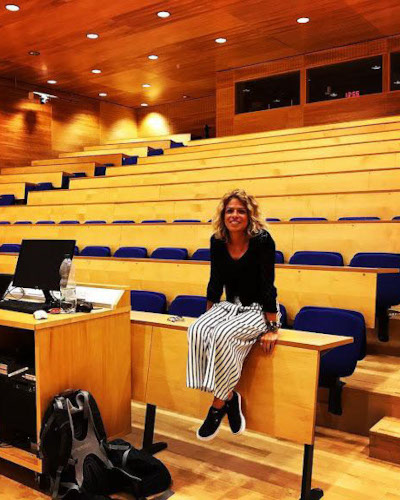 Antonella Iuliano
Antonella Iuliano
University of Basilicata, Italy
 Michail Mamalakis
Michail Mamalakis
University of Cambridge
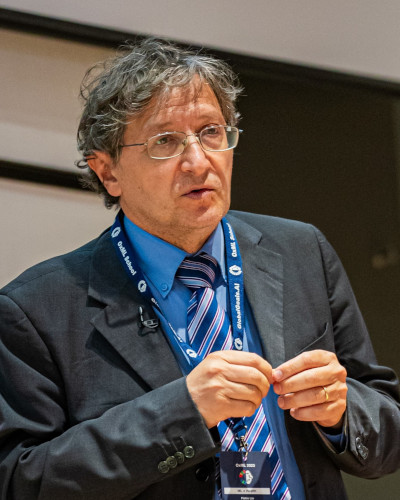 Pietro Liò
Pietro Liò
University of Cambridge
SPECIAL SESSION DESCRIPTION
This special session explores the convergence of graph theory, bioinformatics, metrological frameworks, and artificial intelligence to advance precision healthcare in living environments, including smart hospitals, home-based telehealth, and elderly care systems. Graph-based models provide a powerful foundation for representing complex biomedical ecosystems, such as genomic interactomes, electronic health records (EHRs), patient-symptom trajectories, clinical knowledge graphs, and multimodal sensor networks, while metrological principles ensure traceability, uncertainty assessment, robustness, and data quality for trustworthy AI-driven healthcare solutions.
The session welcomes contributions on graph neural networks (GNNs), machine learning, deep learning, large language models (LLMs), and generative AI methods for predictive, explainable, and personalized healthcare applications. Particular attention is devoted to the integration of graph-based reasoning with AI models to support disease prediction, drug interaction analysis, biomarker discovery, patient monitoring, clinical decision support, and adaptive care pathways in real-world living environments.
Emerging topics include the use of LLMs and foundation models for clinical text understanding, multimodal fusion of structured and unstructured biomedical data, retrieval-augmented and knowledge-enhanced AI for explainable decision support, and generative AI for synthetic health data generation, report generation, and patient-centered interaction. The session also emphasizes the importance of validation, reproducibility, transparency, and uncertainty-aware evaluation of AI and bioinformatics pipelines in healthcare scenarios.
By bridging graph-centric metrology, bioinformatics, machine learning, and generative AI, this special session aims to foster rigorous, scalable, and human-centered approaches for improving diagnostic accuracy, patient outcomes, and intelligent healthcare services in connected living environments.
TOPICS
Revised Topics include
Graph neural networks (GNNs) for predictive modeling of diseases, drug interactions, patient risk stratification, and personalized treatment using EHRs, omics, and longitudinal health data.
- Machine learning and deep learning methods for multimodal healthcare analytics in smart hospitals, home monitoring, and elderly care systems.
- Large language models (LLMs) for clinical text mining, medical knowledge extraction, summarization of patient records, and decision support assistance.
- Generative AI for synthetic biomedical data generation, augmentation of scarce clinical datasets, automated report generation, and conversational health support tools.
- Integration of knowledge graphs and LLMs for explainable AI, retrieval-augmented generation, and trustworthy clinical decision support in telemedicine and digital health.
- Metrological validation, benchmarking, and uncertainty-aware evaluation of graph-based, ML-based, and generative AI pipelines for biomarker discovery and patient monitoring.
- Network analysis with uncertainty propagation for chronic disease management, frailty assessment, and healthy aging in IoT-enabled healthcare environments.
- Fusion of structured and unstructured biomedical data, including EHRs, sensor streams, clinical notes, medical images, and genomic data, for precision medicine applications.
- Explainability, robustness, reproducibility, and traceability of AI systems for healthcare intelligence in real-world living environments.
- Ethical, regulatory, and trustworthy AI perspectives for deploying graph-based and generative models in precision healthcare.
ABOUT THE ORGANIZERS
Cristian Cosentino, an AI Engineer and researcher working in the fields of artificial intelligence, machine learning, and large language models. I completed my PhD in Information and Communication Technologies at the University of Calabria, where I was also involved in teaching, tutoring, and research activities. During my academic path, I was a Visiting Researcher at the University of Cambridge, collaborating on interdisciplinary projects at the intersection of AI, healthcare, and data analysis.
My research focuses on the development of intelligent and explainable AI systems, with particular interests in social media analytics, misinformation detection, disaster monitoring, cybersecurity, review understanding, and healthcare applications. Over the years, I have co-authored several publications in these areas, including works on cryptocurrency forecasting, large language models for disaster reporting, multimodal fake news detection, explainable review classification, agentic RAG systems for cyberattack analysis, and clinically grounded question answering.
Through my work, I aim to design AI solutions that are not only effective, but also interpretable, robust, and applicable to real-world challenges across both scientific and industrial domains.
Annamaria Defilippo is a PhD student in Artificial Intelligence, Computer Engineering, and Biomedical Informatics at the University of Magna Graecia, where her research focuses on graph-based machine learning, network science, and clinical decision-support systems. She has also worked as a visiting student at the University of Cambridge in the Department of Computer Science and Technology, contributing to interdisciplinary projects at the intersection of AI and healthcare. Her work spans patient triage optimization, causal and diffusion modeling in complex systems, and epidemiological simulations leveraging graph neural networks and network-based epidemic models. She has served as a reviewer and as a workshop proposer for international journals and conferences, and has presented her research at major scientific venues.
Valentina Carbonari is Artificial Intelligence, Computer Engineering, and Biomedical Informatics at the University of Magna Graecia, where her research focuses on the development of an agentic AI architecture to support general practitioners in primary care, combining a central planning Large Language Model with domain-specific smaller models and deterministic reasoning tools.
As part of the same research activity, she has conducted studies on the evaluation and clinical adaptation of LLMs and she contributed to computational bioinformatics projects. Her work bridges large language models, molecular data analysis, and translational medicine, with the shared goal of developing reliable and clinically grounded AI tools for precision medicine.
Antonella Iuliano is an Assistant Professor of Medical Statistics at the Department of Health Sciences of the University of Basilicata, Italy. She obtained her PhD in Mathematics in 2012 from the Department of Mathematics and Informatics at the University of Salerno, Italy. Her academic career includes post-doctoral research at the Institute for Applied Computing (IAC-CNR) in Naples, Italy, as well as multiple research appointments at the University of Cambridge, UK, where she worked as both a Visiting Researcher and Research Assistant. She also served as Senior Statistician in the Bioinformatics Core at the Telethon Institute of Genetics and Medicine (TIGEM), Pozzuoli, Italy. Her current research activity is strongly focused on Medical Statistics and Biostatistics, with an emphasis on the development and application of advanced statistical methodologies for healthcare and biomedical research. In particular, her work integrates statistical modeling, machine learning, and artificial intelligence to support precision medicine, clinical decision-making, and the analysis of complex, high-dimensional biomedical data. Her research interests span applications in medicine, biology, and environmental health, with a specific focus on methodological rigor, uncertainty quantification, and data-driven approaches in healthcare. She is actively involved in national and international research projects within the life sciences domain, and her work has been widely published in leading international journals and conference proceedings.
Michail Mamalakis, an Assistant Research Professor at CRUK, University of Cambridge, where I work at the intersection of deep learning, explainable AI, computer vision, medical image analysis, and mechanistic interpretability. My research focuses on developing robust and transparent AI methods for healthcare, with particular emphasis on medical imaging, diagnostic support, and clinically meaningful model explanations.
Over the years, I have contributed to a broad range of studies spanning COVID-19 detection and prognosis, cardiac and pulmonary imaging, disease segmentation, and AI-driven biomarker discovery. More recently, my work has also expanded toward explainability in healthcare AI, faithful interpretation of deep networks, and the use of large language models in biomedical and protein understanding tasks. Through this research, I aim to design AI systems that are not only accurate and clinically useful, but also trustworthy, interpretable, and aligned with real-world medical needs.
Pietro Liò, professor of Computational Biology at the University of Cambridge, where I am a member of the Artificial Intelligence Group and the Cambridge Centre for AI in Medicine. My research lies at the intersection of artificial intelligence, computational biology, and medicine, with the goal of developing data-driven models to better understand disease complexity and support personalised and precision medicine.
Over the years, my work has spanned graph representation learning, computational biology, and AI for healthcare, contributing to influential advances such as graph attention networks, deep graph infomax, and principal neighbourhood aggregation, as well as research on biomedical data analysis and medical applications of machine learning. More recently, I have focused on AI methods for cancer, neurodegenerative diseases, multi-omic and clinical data integration, and graph neural network modelling. Through this work, I aim to bridge AI and biology to create models that are both scientifically meaningful and impactful for medicine.